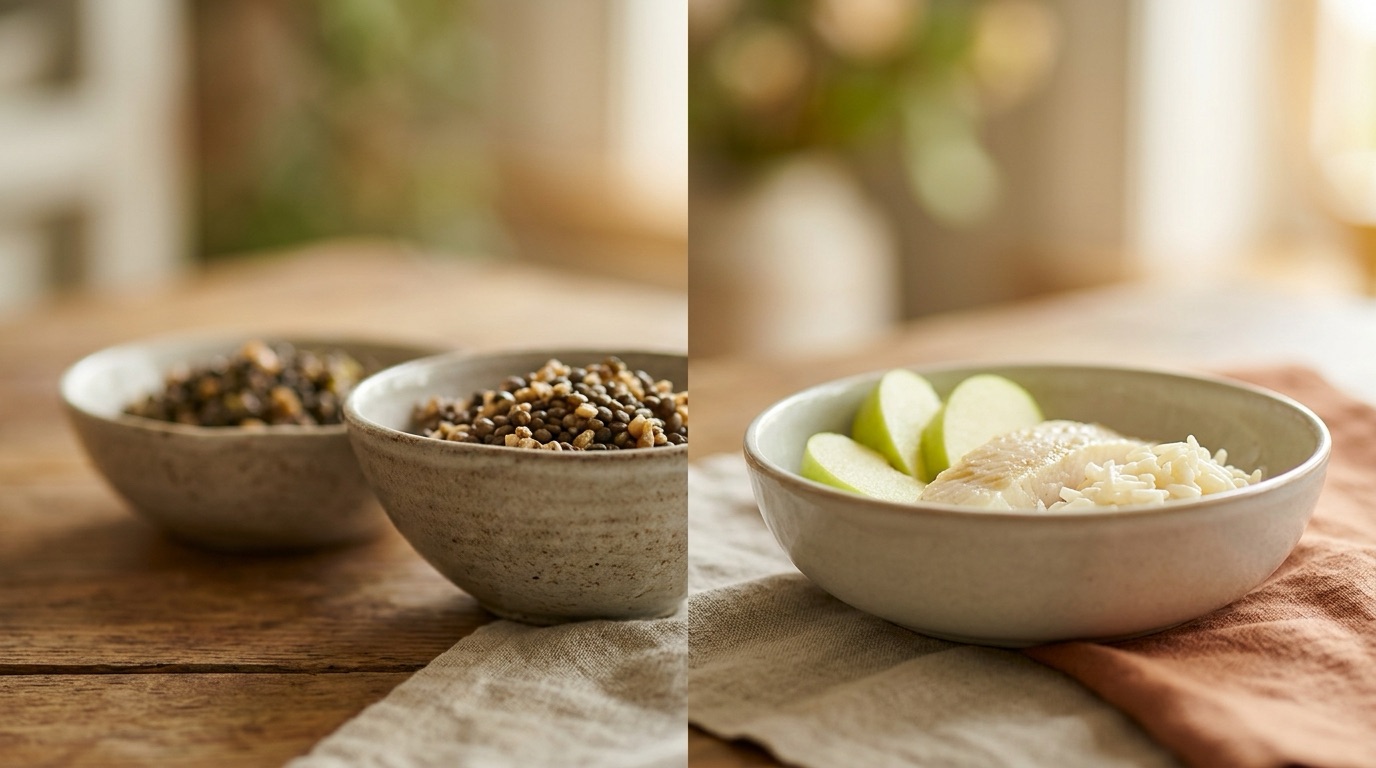
Potassium is one of the trickiest parts of a kidney diet. Healthy kidneys keep blood potassium in a tight, safe range; when kidney function declines, it can build up (a condition called hyperkalemia) and affect your heart rhythm. The good news is that lowering potassium rarely means eating the same three "safe" foods forever. Most of the time, it's about swaps — trading a high-potassium food for a similar lower-potassium one.
Read this first: Not everyone with chronic kidney disease (CKD) needs to limit potassium — and some people need more, not less. Only restrict potassium if your doctor or dietitian has told you to, and use your own lab results as the guide. This article is a starting point, not a prescription.
What counts as "high" potassium?
The National Kidney Foundation uses a simple threshold: a food is generally considered high-potassium when it has 200 mg or more per serving, and lower-potassium below that. One catch worth remembering: portion size can flip a food. A large helping of a "low-potassium" food can easily add up to a high-potassium amount, so the size of the serving matters as much as the food itself.
Fruit swaps
Many of the fruits people reach for by default are high in potassium. Easy trades:
- Banana → apple
- Orange (or orange juice) → grapes or grape juice
- Cantaloupe → blackberries or blueberries
- Mango → cherries
- Apricots, prunes, dried figs → applesauce, peaches, or pineapple
- Papaya → pineapple
Vegetable swaps
Vegetables are where the biggest wins usually hide, since potatoes and tomatoes show up in so many meals:
- Potatoes (white or sweet) → corn
- Tomatoes / tomato sauce → cucumber or peppers
- Cooked spinach → lettuce
- Raw carrots → peppers or cucumber
- Baked, black, or dried beans → green or wax beans
- Beets → onions
- Butternut squash → yellow squash
Pro tip: Preparation matters too — for example, the National Kidney Foundation lists cooked broccoli as higher-potassium but raw broccoli as lower. When in doubt, smaller portions and raw or rinsed versions are usually the safer call.
Everyday food swaps
- Milk and yogurt → smaller portions, or check with your dietitian about lower-potassium alternatives
- Nuts, seeds, and peanut butter → non-whole-grain bread, rice, pasta, or noodles
- Chocolate → cookies without chocolate or nuts
- Potatoes / fries as a side → rice, pasta, or noodles
Two traps people miss
1. "Salt substitutes" are often potassium. Lite salt and many salt substitutes replace sodium with potassium chloride. On a low-potassium diet, these can be a hidden source — so don't reach for them as a sodium fix without checking with your care team.
2. The leaching trick helps, but doesn't erase potassium. Soaking thinly sliced high-potassium vegetables in plenty of unsalted water for a couple of hours can reduce their potassium. But as the National Kidney Foundation notes, leaching doesn't remove all of it — you still need to limit how much of the leached vegetable you eat.
Track your swaps with PureLog
Swaps only work if you can see the difference they make. PureLog tracks potassium on every food you log — one of the minerals most mainstream food apps leave out.
- Turn on Kidney Health in Settings → Health Focus to bring potassium (along with sodium, phosphorus, and fluid) to the front of your dashboard.
- Set your Potassium Limit (mg) in Settings → Edit Profile using the number your dietitian gave you.
- Log foods with Manual Entry or Search Food (free), or Scan Barcode / Scan Nutrition Label (Premium). Where a food's potassium value is missing, PureLog flags it as estimated so you can enter a value yourself.
- Your Today's Summary potassium tile shows amount / limit with a green, yellow, or red bar — so you can check whether a swap actually keeps you under before you commit to it.
A quick cheat sheet
- Reach for an apple instead of a banana.
- Swap potatoes for corn, rice, or pasta.
- Use cucumber or peppers in place of tomatoes.
- Skip salt substitutes — they're often potassium.
- Mind your portions, and log it so the day adds up.
The bottom line
A low-potassium diet doesn't have to be a short list of bland "safe" foods. With a handful of smart swaps — apple for banana, corn for potato, cucumber for tomato — you can keep variety on your plate while staying within your limit. Pair the swaps with your dietitian's targets and a simple way to track potassium, and the day-to-day gets a lot easier to manage.