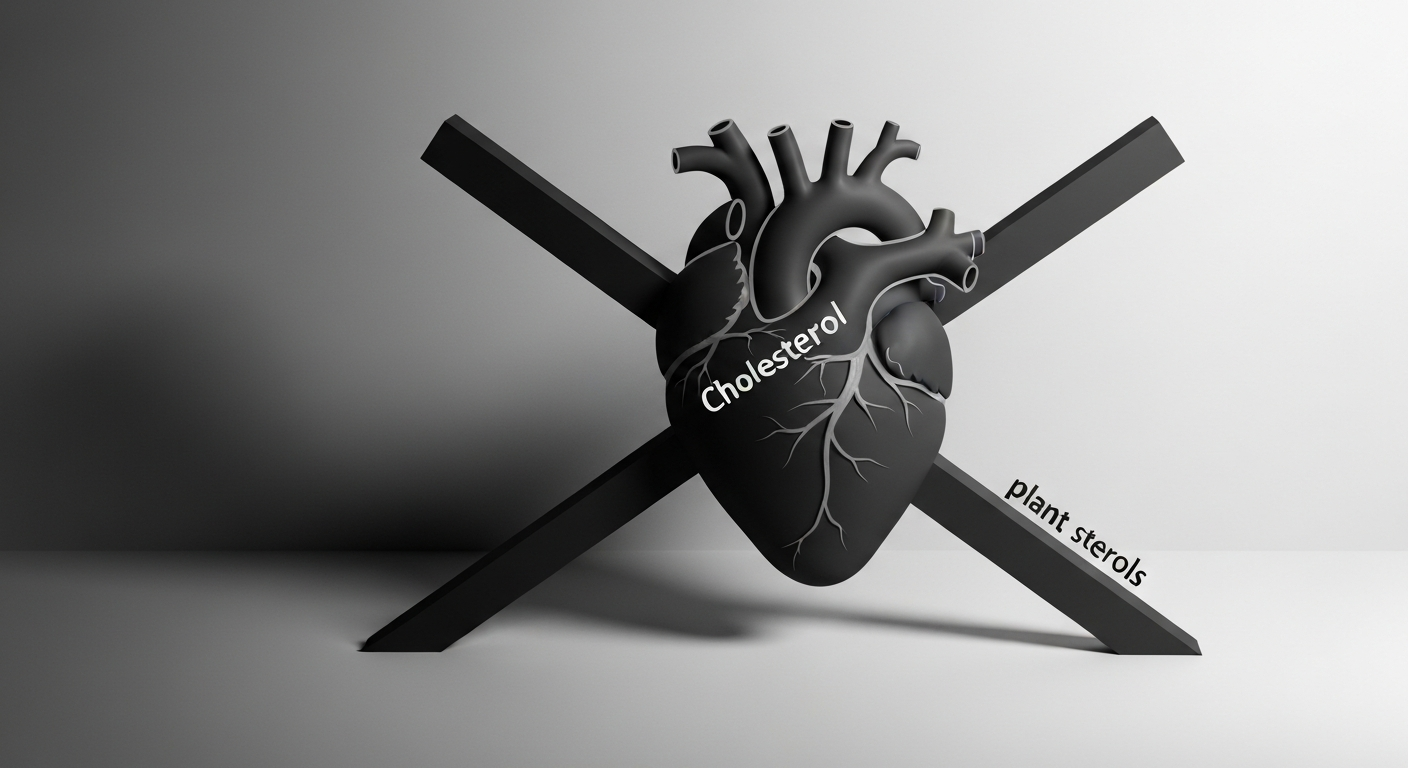
Have you ever heard of a nutrient that "tricks" your body into absorbing less cholesterol? Meet plant sterols and stanols—collectively known as phytosterols. These naturally occurring compounds are found in the cell membranes of plants and have a molecular structure remarkably similar to cholesterol. Because they look so much like the real thing, they compete with cholesterol for absorption in your digestive tract.
The Molecular Decoy
When you consume foods rich in plant sterols, they effectively occupy the "docking stations" in your gut where cholesterol would normally be absorbed. As a result, your body absorbs less dietary cholesterol, and a portion of the cholesterol produced naturally by your liver is also blocked from re-entering the bloodstream. This biological competition is a subtle but powerful tool for maintaining healthy LDL (often called "bad" cholesterol) levels.
While most people get a small amount of sterols from a standard diet, increasing your intake can provide more significant heart-health benefits. To put this into practice, you don't need to rely solely on specialized supplements. You can find plant sterols naturally in a variety of whole foods, including:
- Seeds and Nuts: Sesame seeds, sunflower seeds, and pistachios are among the highest natural sources.
- Whole Grains: Wheat germ and oat bran offer a steady supply.
- Vegetable Oils: Unrefined oils like extra virgin olive oil and flaxseed oil.
- Fortified Foods: Many heart-healthy spreads, yogurts, and juices are now enriched with plant sterols specifically to help with cholesterol management.
For the best results, aim to include these foods consistently throughout the week. Because plant sterols work by blocking absorption during digestion, they are most effective when consumed as part of a meal containing a small amount of healthy fat.